
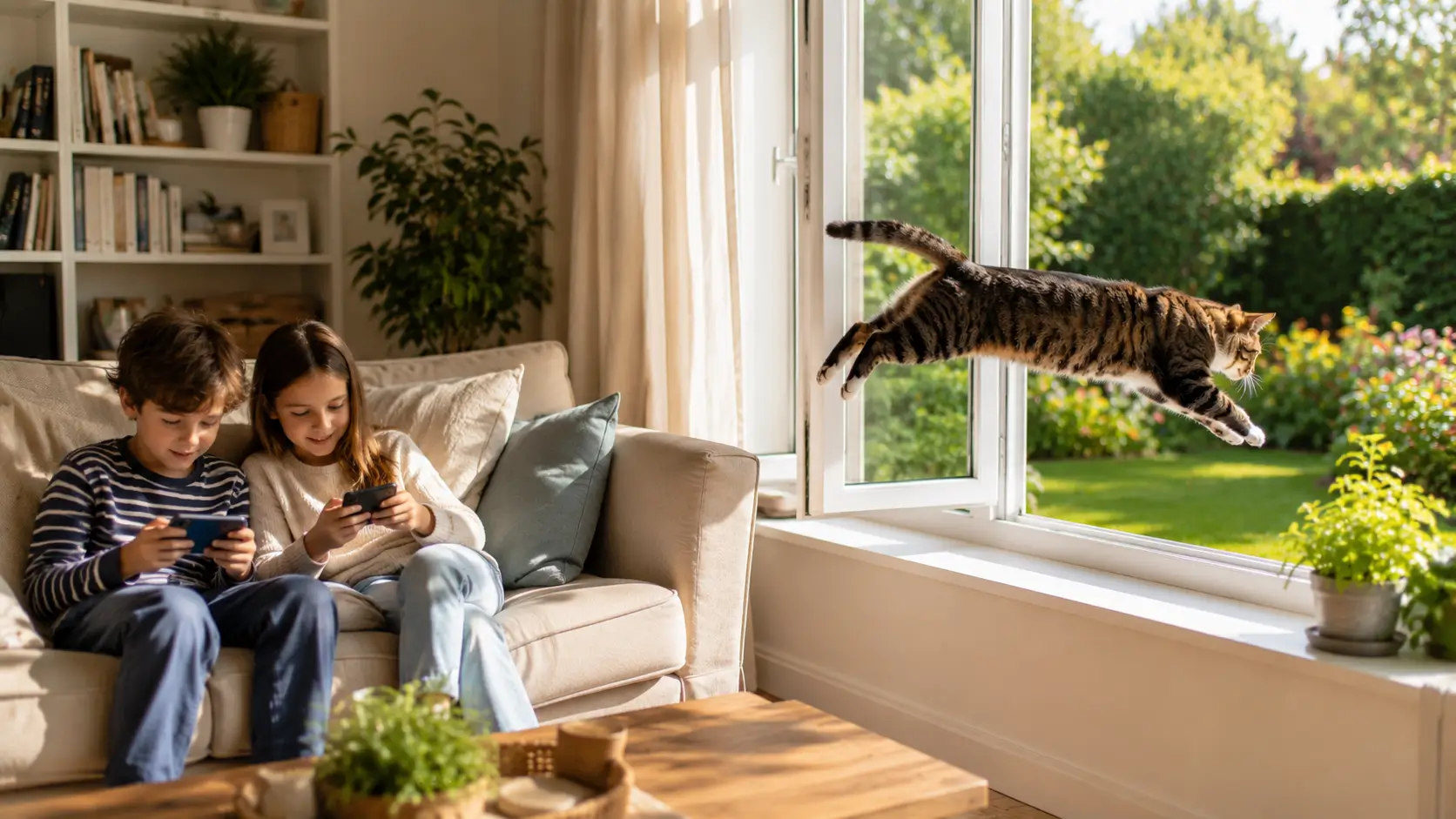
Why Does My Cat Want to Go Outside & How to Stop It
Many cat owners ask, “Why does my cat want to go outside?” after noticing their cat sitting by the door, meowing to be let out, or trying to sneak outside. While this behavior can be frustrating, it is usually completely normal. The good news is that wanting to go outside doesn’t always mean your cat is unhappy indoors.
In many cases, there is a simple reason behind the behavior, such as boredom, curiosity, or a previous outdoor experience. Fluffy Space shares real methods with years of experience. In this guide, you’ll learn why your cat wants to go outside and how to stop it safely without affecting your cat’s happiness.
10 Common Reasons Indoor Cat Wants to Go Outside
Every cat has its own reason for wanting to go outside. Understanding what’s causing this behavior is the first step to keeping your cat happy, safe, and healthy indoors. By learning these common reasons, you can make better decisions. Here are some common reasons
1. Natural Hunting Instincts
Cats are born with a strong hunting instinct, even if they have always lived indoors. They enjoy watching, stalking, and chasing birds, insects, or anything that moves. Seeing or hearing wildlife outside can trigger these natural behaviors, making your cat eager to investigate and experience the excitement beyond the door.
2. Curiosity About the Outside World
Cats are naturally curious and enjoy discovering new things. The outdoors offers different smells, sounds, people, animals, and changing scenery that they cannot experience inside. Even simple things like falling leaves, passing cars, or birds singing can make your cat want to see what is happening outside.
3. Boredom and Lack of Mental Stimulation
If your cat spends most of the day sleeping or repeating the same routine, it may become mentally bored. The outside world offers new experiences that seem much more interesting. Regular playtime, puzzle feeders, climbing furniture, and rotating toys can help keep your cat entertained indoors.
4. Previous Outdoor Experience
Cats have good memories, especially when something is enjoyable. If your cat has been outside before, it may remember the sights, smells, and freedom it experienced. Because of those positive memories, it may wait by the door, meow, or try to slip outside whenever it gets the chance.
5. Following Other Cats or Animals
Your cat may become interested when it sees another cat, bird, or squirrel outside. Some cats want to play, while others become protective of their territory and try to chase unfamiliar animals away. This behavior is usually driven by instinct and curiosity rather than a desire to leave home permanently.
6. Looking for a Mate
If your cat has not been spayed or neutered, it may try to go outside to find a mate. This urge is usually stronger during the breeding season. Your cat may become more vocal, restless, scratch at doors, or attempt to escape whenever an opportunity arises.
7. Why Does My Spayed Cat Want to Go Outside?
Spaying removes the desire to reproduce, but it does not remove your cat’s natural instincts. A spayed cat may still want to explore, watch wildlife, exercise, or investigate new smells. This behavior is completely normal and usually reflects curiosity rather than hormonal changes.
8. Changes in the Home Environment
Cats prefer a stable routine, so changes at home can affect their behavior. A new pet, baby, family member, visitors, or moving to a new house may cause stress or confusion. Some cats become interested in going outside because they are looking for a quieter place or a change of scenery.
9. Wants More Exercise and Adventure
Some cats have a lot of energy and need more physical activity than others. If they don’t have enough opportunities to run, climb, jump, or play indoors, they may start looking outside for adventure. Daily interactive play and climbing spaces can help satisfy these needs safely.
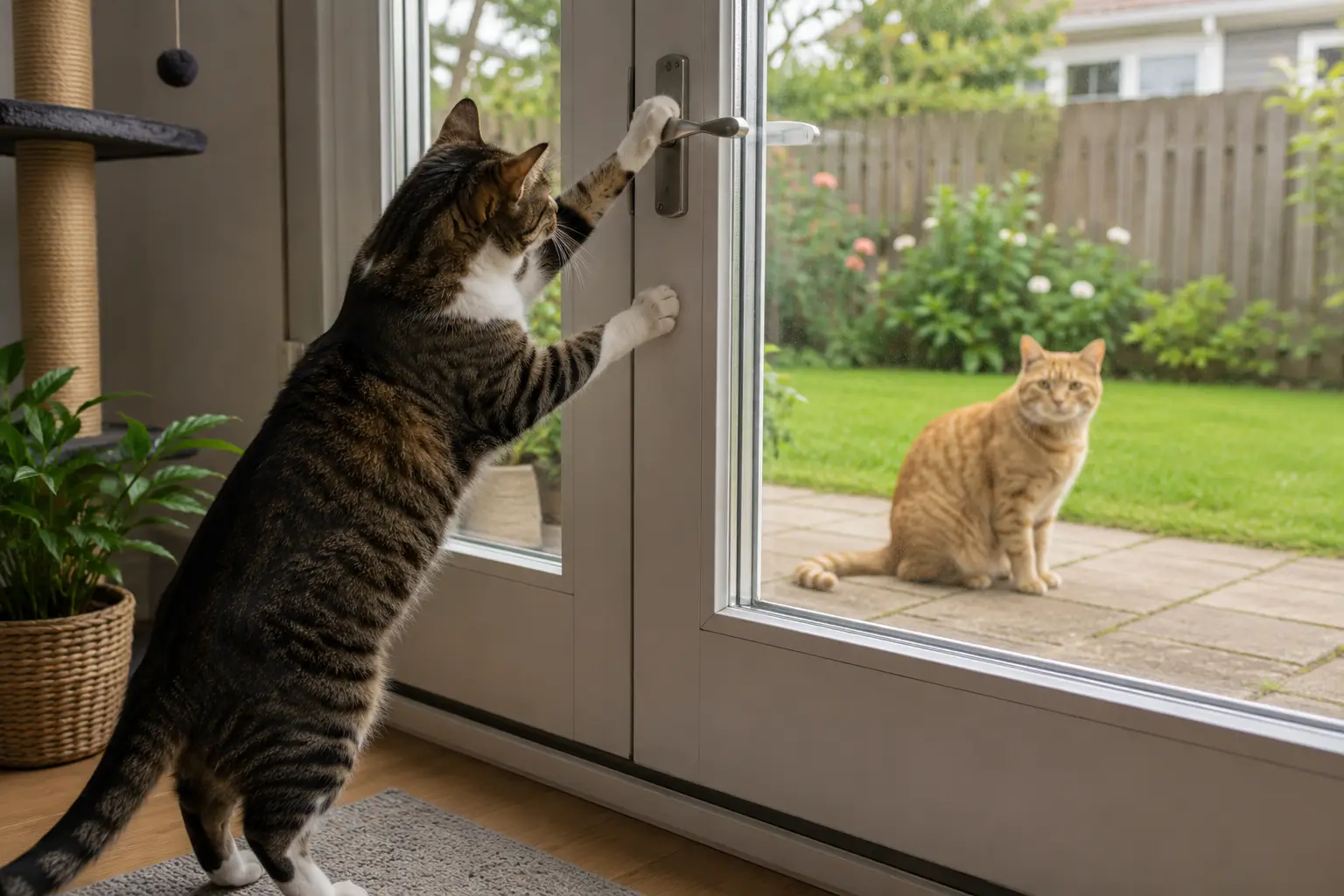
10. Learned Door-Dashing Behavior
Cats are quick learners. If your cat has successfully gotten outside after waiting by the door or meowing, it may repeat the same behavior again. Over time, this becomes a habit. Staying consistent with training and avoiding accidental rewards can help reduce these escape attempts.
How to stop a cat from wanting to go outside
Now that you know why your cat wants to go outside, the next step is to manage the behavior safely. You may not be able to remove your cat’s natural instincts, but you can reduce its desire to go outside by making indoor life more enjoyable.You should try to be the best pet parent for your feline friend.Here are some practical ways to help.
Play With Your Cat Every Day
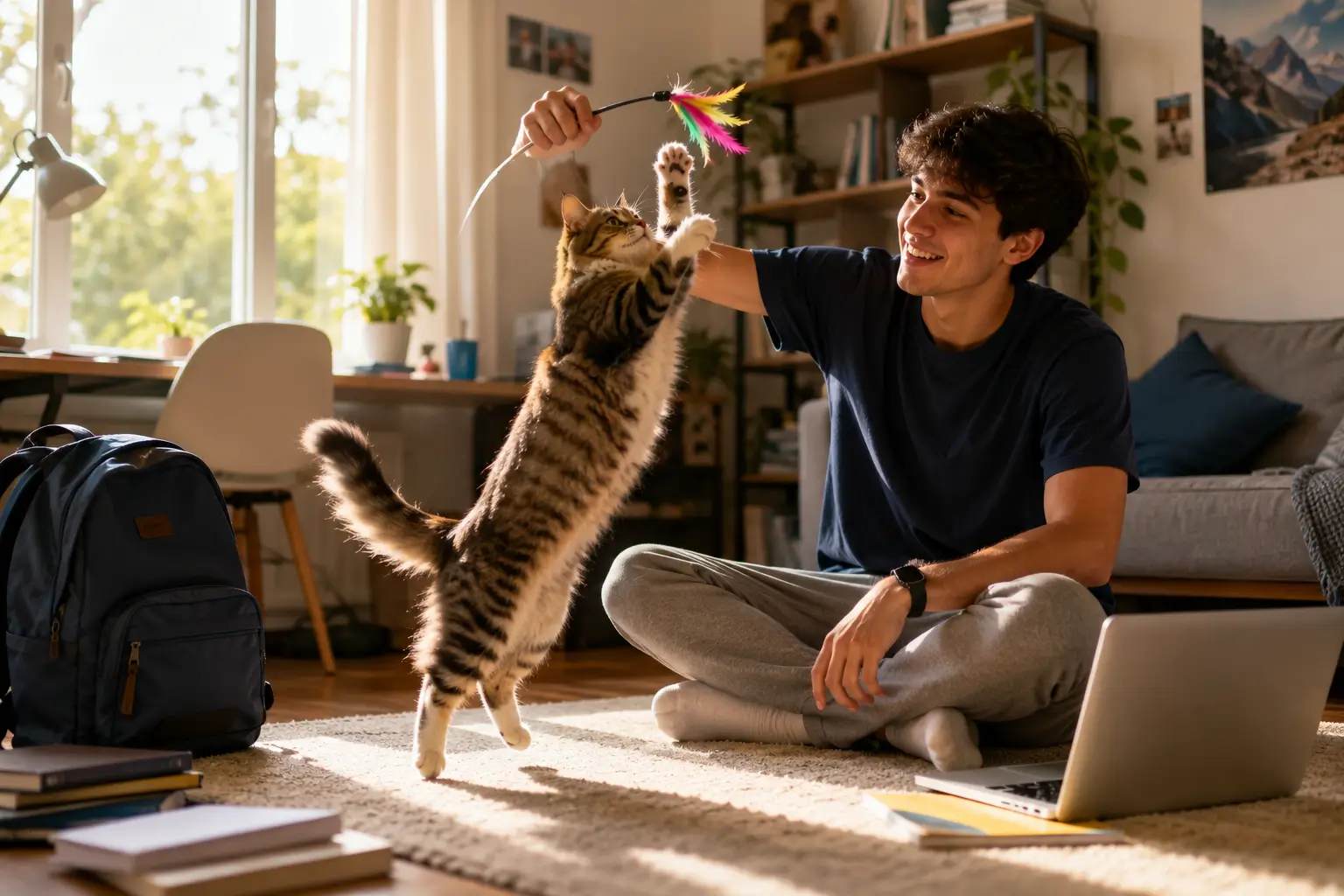
Playing with your cat every day is one of the easiest ways to reduce its desire to go outside. During playtime, your cat gets to chase, pounce, and “hunt,” which satisfies its natural instincts in a safe way.
Interactive toys like feather wands, toy mice, or balls encourage movement and help burn off extra energy. Aim for two or three play sessions of about 10–15 minutes each day. A tired and entertained cat is much less likely to sit by the door looking for adventure.
Keep Your Cat Mentally Stimulated
Cats need mental exercise just like physical exercise. If your cat does the same things every day, it can become bored. A bored cat may start looking outside for something more exciting. Puzzle feeders and treat-dispensing toys keep your cat’s mind active.
Scratching posts and different toys also help prevent boredom. Try rotating toys every few days to keep them interesting. You can also hide treats around the house to encourage your cat to explore. A mentally stimulated cat is happier and less likely to want to go outside.
Create an Exciting Indoor Environment
Your home should give your cat plenty of opportunities to climb, explore, hide, and relax. Cat trees, wall shelves, tunnels, cardboard boxes, and cozy resting spots allow your cat to stay active without going outdoors.
Try changing the layout or adding something new from time to time so your cat always has something interesting to explore. An enriched indoor environment for your cat helps satisfy curiosity while keeping it safe.
Set Up a Window Perch
Many cats enjoy watching the world outside. A window perch or cat hammock gives your cat a safe place to observe birds, squirrels, butterflies, people, and passing cars. This type of “cat TV” provides entertainment without exposing your pet to outdoor dangers.
Placing a bird feeder outside the window (where safe and allowed) can make the view even more interesting and help your cat stay occupied.
Try Harness Training
If your cat really enjoys the outdoors, harness training can be a safe compromise. A well-fitted cat harness and leash allow your cat to explore outside while you stay in control. Start by letting your cat wear the harness indoors for short periods until it feels comfortable.
Once your cat is relaxed, introduce short outdoor walks in a quiet area. Never force your cat if it seems scared or uncomfortable, and always supervise outdoor adventures.
Build a Catio or Secure Outdoor Space
A catio is an enclosed outdoor area that allows your cat to enjoy fresh air, sunshine, and outdoor sights without the risks of free roaming. Your cat can watch birds, smell fresh air, and relax safely while being protected from traffic, predators, diseases, and getting lost.
Even a small balcony enclosure or secure patio can provide many of the benefits of being outside while giving you peace of mind.
Don’t Reward Door-Dashing
Cats quickly learn from experience. If your cat meows at the door and you let it outside, it may begin to think that this behavior always works. Over time, the habit becomes stronger. Instead, wait until your cat moves away from the door before opening it.
Reward calm behavior with treats, praise, or playtime. Being consistent helps your cat understand that waiting at the door will not lead to going outside.
Spay or Neuter Your Cat
If your cat has not been spayed or neutered, it may have a stronger urge to roam in search of a mate, especially during the breeding season. Spaying or neutering helps reduce this hormonal drive and can make your cat calmer and less likely to try escaping.
While the procedure won’t remove your cat’s curiosity or love of exploring, it often reduces unwanted roaming and door-dashing caused by reproductive instincts.
Keep a Consistent Daily Routine
Cats feel more comfortable when they know what to expect each day. Try to feed your cat, play with it, and keep its bedtime routine around the same time every day. A predictable schedule helps your cat feel secure and reduces stress.
When your cat’s daily needs are met regularly, it is less likely to become restless or spend long periods asking to go outside.
Visit Your Veterinarian if the Behavior Changes Suddenly
If your cat has never shown much interest in going outside but suddenly becomes obsessed with escaping, pay attention to the change. Sudden behavioral changes can sometimes be caused by stress, anxiety, pain, or an underlying medical condition.
If your cat is also eating less, hiding more, becoming unusually vocal, or showing other unusual signs, schedule a visit with your veterinarian. Identifying and treating any health problem early can help your cat return to its normal behavior.
Final Words,
If you’ve been asking “Why does my cat want to go outside?”, remember that this behavior is usually normal. Most cats are simply following their natural instincts or satisfying their curiosity. With regular play, enrichment, and patience, you can reduce your cat’s desire to go outside while keeping it happy and healthy indoors.
Frequently Asked Questions (FAQs)
1. Why does my indoor cat suddenly want to go outside?
Your cat may be bored, curious, or interested in something outside, like birds or other animals. Changes at home can also cause this behavior. If it starts suddenly and seems unusual, talk to your veterinarian.
2. Is it normal for a cat to meow at the door to go outside?
Yes. Many cats meow because they want to explore or have learned that meowing sometimes gets the door opened. Give your cat more playtime and avoid opening the door when it is begging to go out.
3. Why does my spayed or neutered cat still want to go outside?
Spaying or neutering stops the urge to find a mate, but your cat will still be curious. It may want to explore, watch birds, or enjoy new smells outside.
4. Should I let my indoor cat go outside?
It is usually safer to keep your cat indoors. Outside, cats can face dangers like cars, diseases, and other animals. If your cat loves being outside, try a harness and leash or a secure catio instead.
5. How can I stop my cat from trying to run outside?
Play with your cat every day, provide toys and climbing spaces, and keep it entertained indoors. Don’t let your cat outside when it is waiting at the door, or it may keep trying.
6. Will my cat stop wanting to go outside?
Many cats become happier indoors when they have enough play, exercise, and things to explore. They may still be curious, but they are less likely to try to escape.